
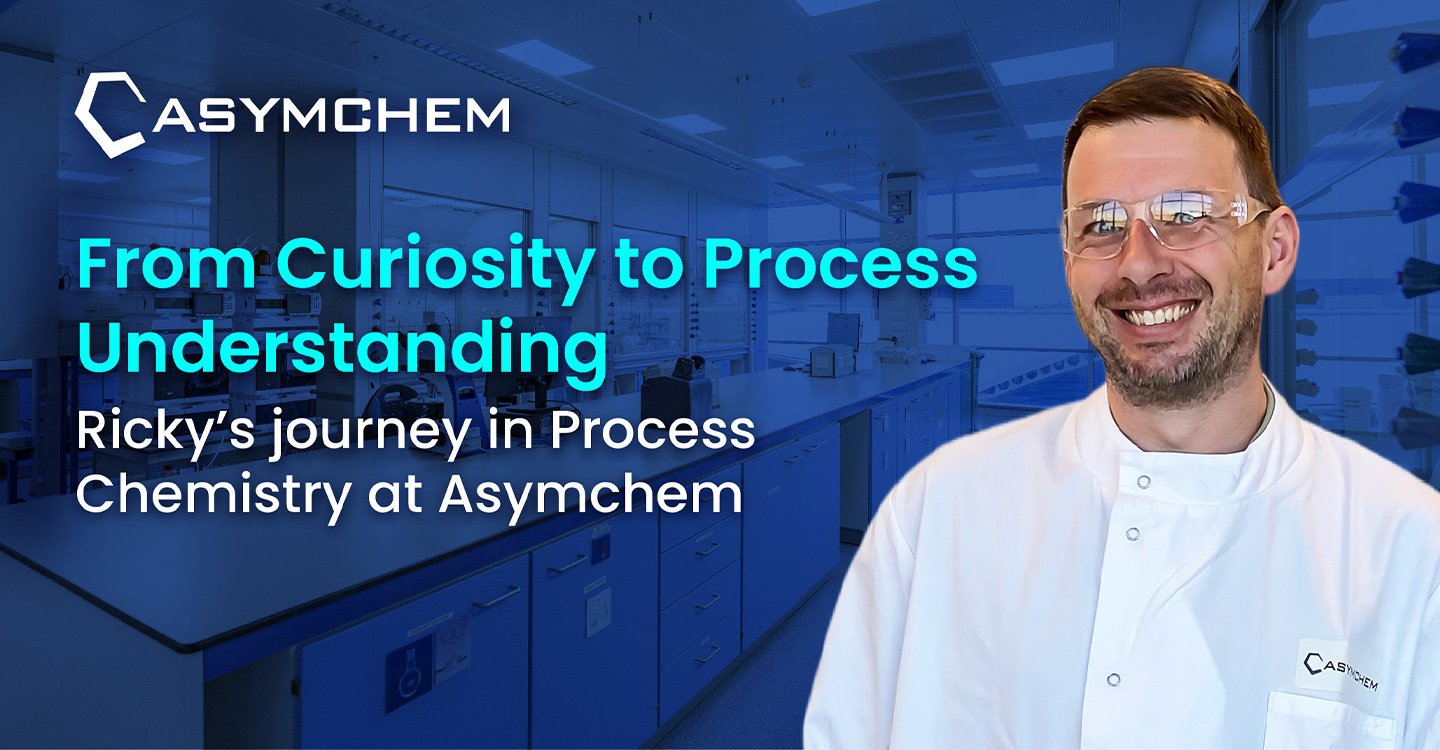
From Curiosity to Process Understanding: Ricky Jones’ Journey in Process Chemistry
How scientific insight, predictive modelling and mentorship help turn chemistry into robust manufacturing processes.
For Ricky Jones, Senior Principal Scientist and Project Lead within Asymchem’s Process Chemistry Department, the most satisfying result is no longer simply seeing the final active pharmaceutical ingredient emerge as a clean white solid. It is reaching the point where a process is understood well enough to explain subtle changes, predict outcomes and guide manufacturing decisions with confidence.
A curiosity sparked early
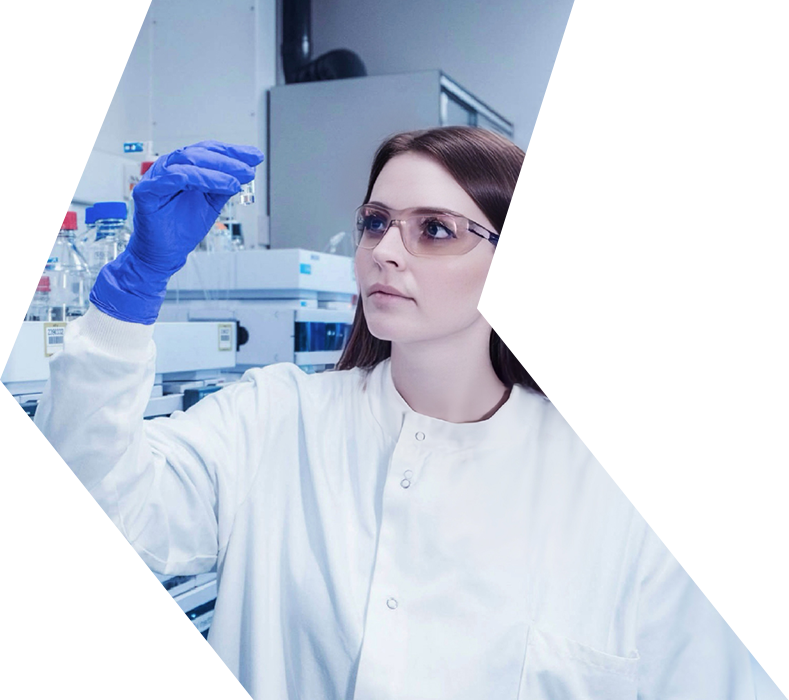
Ricky’s interest in science began at the age of ten, when he received his first chemistry set and performed flame-colour experiments in his nanan’s kitchen after Christmas dinner. That early curiosity soon became a desire to understand not only what medicines do, but how they are made.
He initially planned to study pharmacy. However, after two years of part-time work in a pharmacy during his A-level studies, Ricky realized that he wanted to be involved in creating medicines rather than dispensing them. He went on to complete a master’s degree in chemistry at the University of York, including an industrial placement with AstraZeneca. The placement showed him how scientific research could be translated into medicines used in the real world and confirmed that the pharmaceutical industry was where he wanted to build his career.
After graduating, Ricky joined Pfizer as a Process Chemist and spent around 20 years with the company. During that time, he developed and optimized chemical processes to manufacture medicines safely, efficiently and at scale. The experience strengthened his appreciation for the combination of scientific problem-solving, practical execution and cross-functional teamwork required to move chemistry from the laboratory into production.
A familiar partner and a new opportunity
Ricky’s move to Asymchem was grounded in first-hand experience. During his years at Pfizer, he worked on multiple projects with Asymchem and collaborated with its teams in China. When Asymchem established its presence in Sandwich, joining the company felt like a natural fit for him: it offered a new environment built on a familiar foundation of trust and scientific collaboration.
Today, Ricky’s role combines hands-on science, project leadership and mentorship. This combination reflects the nature of work in a CDMO, where every client program brings a different molecule, a different set of constraints and a new opportunity to create a practical solution.
Turning promising chemistry into a manufacturable process
For Ricky and his team, a typical project begins with a scientific question: how can a promising reaction be transformed into the best possible manufacturing process? The answer must balance multiple priorities, including cost, throughput, product quality, safety, robustness and sustainability.
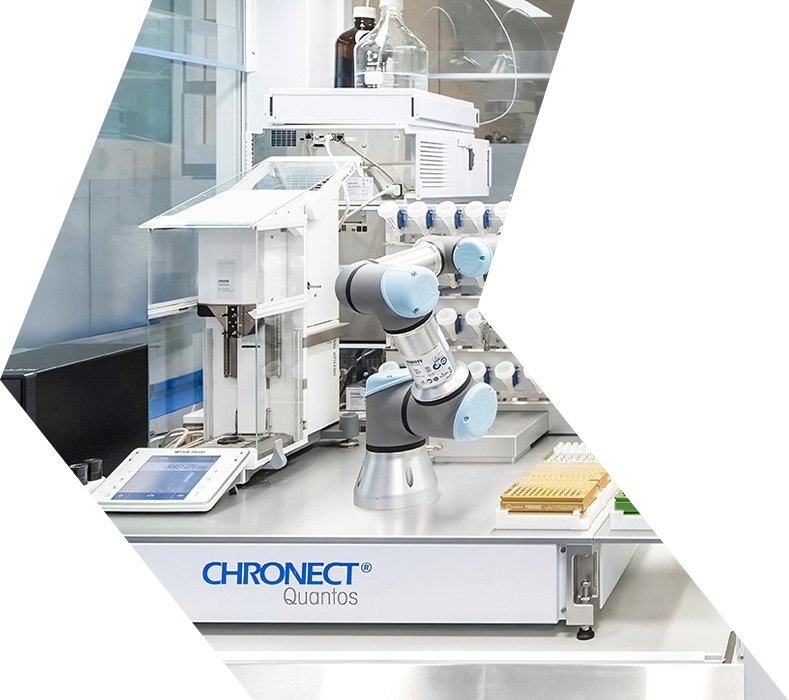
Early results may come from high-throughput experimentation (HTE), which allows many reaction conditions to be evaluated efficiently. Ricky and the process chemistry team then develop those initial results into scalable and practical routes. He works closely with Process Safety colleagues to confirm that the chemistry can be operated safely at a larger scale, and with Analytical teams to identify, understand and control impurities that may affect product quality.
For Ricky, the work is part detective story and part engineering discipline. Improving a reaction may mean increasing efficiency, reducing cost, strengthening process control or finding a more sustainable way to produce a molecule. Each improvement depends on understanding what is happening throughout the reaction rather than focusing only on its starting materials and final result.
When models become evidence of understanding
Over time, modelling has changed what scientific success looks like for Ricky. Design of experiments (DoE) enables process teams to study how multiple variables interact and to build models that connect operating conditions with outcomes such as yield and impurity profile. He believes that the real value of these models becomes clear when they can explain subtle batch variations or guide decisions at manufacturing scale.
In one project, knowledge developed through extensive experimentation and modelling was transferred into full manufacturing and process validation. The resulting models helped Ricky’s team identify when operating parameters had moved slightly away from their intended set points. For him, that predictive ability demonstrated a deep and practical understanding of the process.
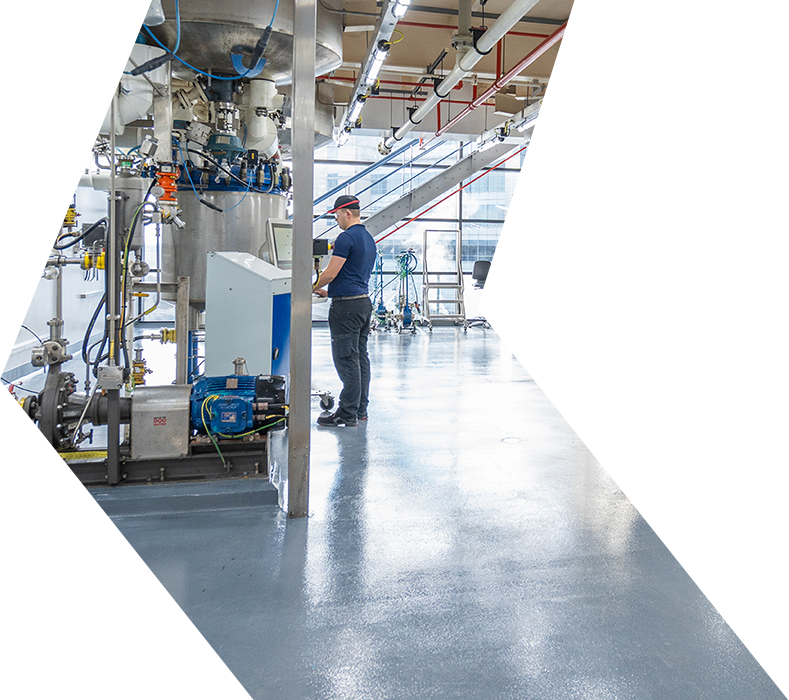
In another project, Ricky and his colleagues applied the same thinking in reverse. They used DoE models to predict the manufacturing set points needed to achieve a specific impurity profile for a toxicology batch. The plant-scale run delivered the intended profile, showing how a well-constructed process model can move beyond retrospective explanation and become a tool for purposeful manufacturing design.
“When the models can explain subtle variations in yield or impurity profiles, that is when you know you truly understand the process.”
Developing scientists who observe, question and learn
For Ricky, understanding a process also means helping other scientists learn how to build that understanding. Mentoring younger chemists is therefore not separate from project delivery; it is part of creating strong scientific teams.
He considers attention to detail one of the most important qualities for a young scientist to develop. Rather than setting up a reaction at the end of the day and seeing only the result the next morning, Ricky encourages younger colleagues to stay close to the chemistry while it is happening. By observing, taking samples and following how a reaction evolves, they can see competing pathways and gain insights that would be missed by looking only at the beginning and the end.
Ricky also emphasizes the importance of listening. Some of the most valuable scientific lessons come from experiments or processes that did not go according to plan. By sharing what went wrong, how the problem was investigated and how it was resolved, he and other experienced colleagues can pass on hard-won knowledge and help younger scientists avoid having to learn every lesson first-hand.
Understanding that creates value
From his childhood chemistry set to decades of process development, Ricky’s motivation has remained consistent: he wants to understand how things are made, solve difficult problems and turn scientific ideas into practical outcomes.
At Asymchem, his approach connects rigorous experimentation, predictive modelling, multidisciplinary collaboration and scientific mentorship. Together, these capabilities help Ricky and his colleagues build processes that are not only scalable and robust, but genuinely understood, giving project teams and clients greater confidence as programs move from the laboratory toward manufacturing.